
Choosing your stone worktop is often the exciting part of a kitchen or bathroom renovation. Stone choice selected, colour decided, samples laid out on the kitchen table. But once that decision is made, a new question quickly follows: what on earth do I pair it with?
Splashbacks, flooring and surrounding surfaces all play a big role in how your worktop looks and feels in the finished space. Everything feels balanced and intentional when you get it right, but when you get it wrong, the stone can feel overpowering. However, pairing surfaces doesn’t need to be complicated. With a bit of planning and a few design principles in mind, you can create a cohesive, well-considered space that feels like it just makes sense rather than overdesigned.
In this blog, we walk you through how to coordinate stone worktops, splashbacks and flooring without clashing, enabling you to show off your stone of choice where it naturally fits.
Why your worktop should lead the entire design
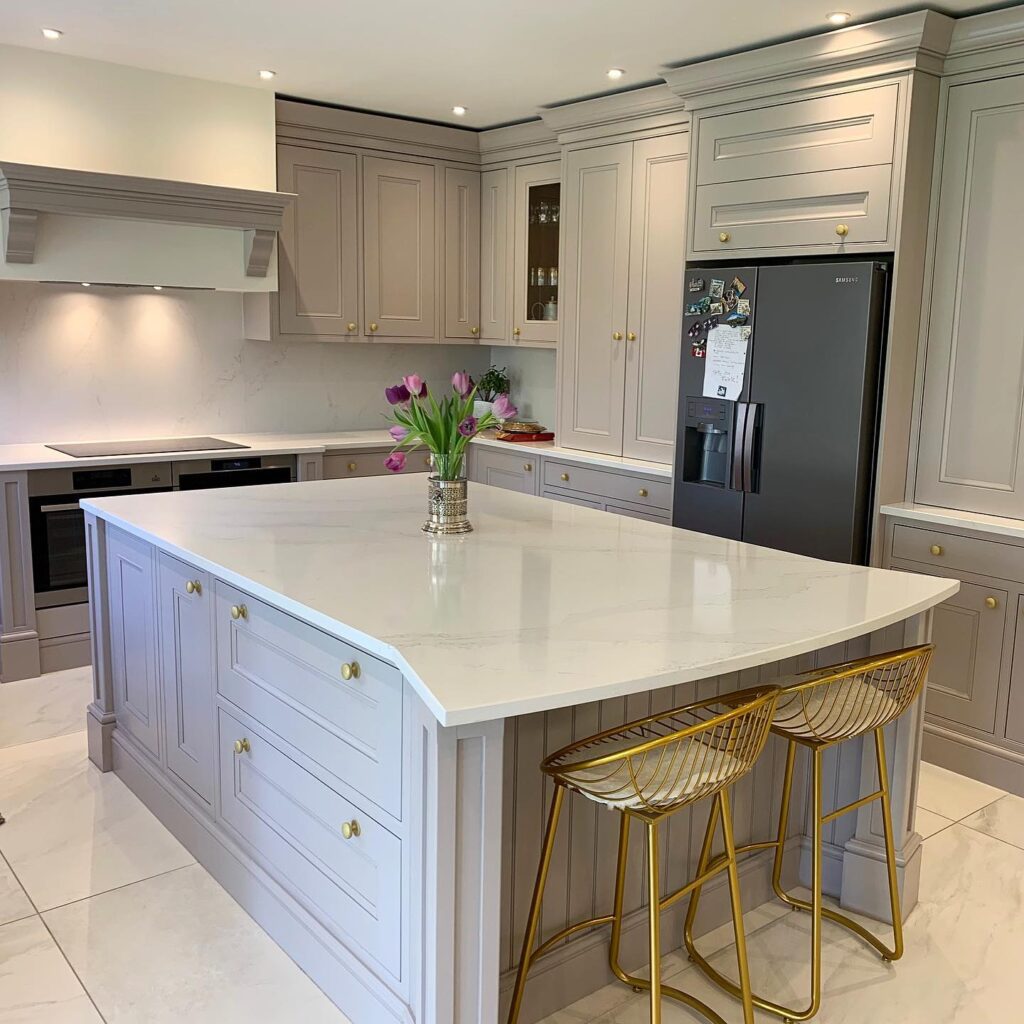
Your worktop should always lead the design conversation. It’s one of the largest visual surfaces in the room and often the most eye-catching, particularly with patterned stones. Before thinking about splashbacks or flooring, take time to really understand your worktop.
Ask yourself these questions about your kitchen worktop:
•Is it bold or subtle?
•Does it feature veining or a more uniform pattern?
•Is the colour warm or cool?
Porcelain and quartz worktops are popular precisely because they offer consistency and control in design, making them easier to pair with surrounding surfaces.
If your worktop is statement-led, such as veined quartz inspired by marble or a porcelain slab with texture, let it take centre stage. Everything else should support it rather than compete with it.
How quartz worktops work with splashbacks (and what to avoid)
Quartz is one of the most versatile materials when it comes to pairing with splashbacks. Its consistent appearance and wide colour range make it suitable for both subtle and striking combinations.
If you’re aiming for a clean, seamless finish:
- Using the same quartz for both the worktop and splashback creates a sleek, high-end look
- This works especially well in modern kitchens or open-plan spaces
- Brands like Silestone, Caesarstone and CRL Quartz are ideal for this approach thanks to their refined finishes and durability
If you’d prefer a bit of contrast instead:
- Stick to simple tiled splashbacks in warm whites, soft greys or neutral tones
- Pull a subtle colour from the quartz itself, especially if it has veining, to keep everything connected
- Collections such as IQ Quartz, Picasso and Fugenstone pair particularly well with understated splashbacks
Patterned tiles can work but ideally restrain from them. If your quartz is busy, it’s best to go for a simpler splashback. If your quartz is minimal, you have more freedom to introduce textures or patterns behind it.
Designing a kitchen with porcelain worktops
Porcelain worktops are known for their strength, durability and design flexibility. With finishes such as concrete-effect or realistic stone replicas, porcelain offers endless design potential.
When pairing porcelain with splashbacks, consider whether you want continuity or contrast. Porcelain slab splashbacks are increasingly popular, especially for full-height installations behind hobs. This creates a high-end look while remaining practical and easy to clean.
If you’re using porcelain with a strong visual effect, such as bold veining, balance it with simpler splashback choices. Subtle tiles, glass splashbacks or even painted finishes can prevent the space from feeling overwhelming.
Flooring choices that complement stone worktops
Flooring is often overlooked until late in the design process, but it plays a big role in tying everything together.
With quartz or porcelain worktops, flooring should either ground the space or soften it. If your worktops are light, darker or mid-tone floors can provide stability, with dark or dramatic, lighter floors help keep the room feeling open.
Porcelain floor tiles are a natural companion to both quartz and porcelain worktops, offering durability and visual consistency without feeling repetitive. Wood-effect porcelain tiles are particularly effective, adding warmth while maintaining practicality.
If you’re wanting to work with more natural materials like granite or marble, the same principles apply. Let one surface lead and keep the others supportive rather than competing for attention.
Mixing stone, texture and finishes without overcomplicating the space
Mixing materials doesn’t mean chaos. In fact, combining engineered stone with natural materials can add depth and character when done thoughtfully.
Quartz and porcelain worktops pair well with timber cabinetry, metal finishes and subtle natural textures. Granite worktops and marble can be introduced as feature elements, such as islands or vanity units, while keeping surrounding surfaces calm.
A simple rule of thumb is to limit the number of “busy” surfaces in one space. One statement surface is usually enough. Everything else should enhance it, not distract from it.
Colour coordination that feels intentional
Colour is often where things go wrong. The key is to stick to a consistent undertone throughout the space. If your quartz or porcelain has cool undertones, keep splashbacks and flooring within the same temperature range. Mixing warm and cool tones without intention can make a space feel disjointed.
Neutral palettes remain popular for good reason. Soft greys, warm whites and natural stone tones allow your worktop to shine while giving you flexibility with accessories and finishes.
If you want to introduce colour, do so in controlled doses. Splashbacks, flooring accents or even cabinetry can carry colour without overwhelming the stone surfaces.
Designing for the long term, not just current trends
Trends come and go, but stone worktops are a long-term investment. Quartz and porcelain are particularly valued for their durability and low maintenance, making them ideal for busy kitchens and bathrooms.
When pairing surfaces, think about how the space will feel in five or ten years, not just how it looks today. Timeless combinations tend to age better than overly trend-led designs, especially when stone is involved.
Bringing the whole space together
Pairing stone worktops with splashbacks and flooring doesn’t have to feel daunting. By letting your worktop lead, balancing patterns and textures, and sticking to a cohesive colour palette, you can create a space that feels considered, practical and visually harmonious.
Quartz and porcelain make the process easier thanks to their versatility and performance, while granite and marble still have their place for those seeking natural character and timeless appeal.
Seeing materials together, discussing options and understanding how they’ll work in your space helps you feel more confident, ensuring the final result is a kitchen or bathroom you’ll love living with every day.
If you’re planning a new kitchen or simply need guidance on pairing worktops with splashbacks and surfaces, our experienced team is here to help. Visit our showroom or get in touch for expert advice tailored to your space.